
About the RPQRR Latest News and Links Our Project Lists Donations and Support Contact Us
Rolling Plains Quail Research Ranch

Operation Transfusion: We have lift-off!

If you were a child of the 1960s chances are you remember the phrase during NASA’s Apollo space program. The thundering lift-off symbolized the start of a new odyssey for the crew members and those of us who thought astronauts were like Greek gods.

An odyssey is defined as “a long wandering or voyage usually marked by many changes of fortune.” A successful space voyage required incredible planning by a large team of scientists. The project’s status was tracked intensively from Mission Control. Even then sometimes things went horribly wrong (e.g., Apollo 13; if you haven’t seen the movie starring Tom Hanks I highly recommend it). We listened keenly to news correspondents Chet Hundley and Walter Cronkite and scientific sidebars by Jules Bergman.

But in one respect, at least relative to quail managers, the NASA team had it easy—their scientific discipline dealt mostly with physics, not ecology. The former is bound by various physical laws (e..g, gravity), and behaves according to mathematical equations. The latter’s laws are less predictable and more vulnerable to chaos. But we work with what we have.

We indeed had lift-off on March 15 on a ranch on the Shackelford-Stephens county line. The scrub-brush plains of Shackelford and Stephens counties were the epicenter of quail hunting in the Rolling Plains—until about 2007. Since then, hunters have taken more bucks than bobwhites—a bitter pill to swallow for those of us who revere bird dogs more than antlers and chittam thickets over corn feeders.

The goal of Operation Transfusion is to evaluate the use of translocating “wild-trapped” quail back to their historic domains as a means of restoring sick populations. Frustrated quailfolk have tried releasing pen-reared quail ad nauseum—but it just doesn’t work. Translocation with wild stock worked for wild turkeys white-tailed deer in Texas, and it’s proven successful with bobwhites in southern Georgia. It should work in west Texas.

But such a mission takes a lot of planning too. Finding sources for wild birds was difficult. Granted, after two years of drought, and perhaps other insidious problems (e.g., eyeworms), quail abundance is at a record low level across west Texas. Garnering permission to trap quail under such conditions proved to be more difficult than what I’d ever imagined. But a half-dozen landowners did step forward and give us an opportunity to recruit some intrepid quail.

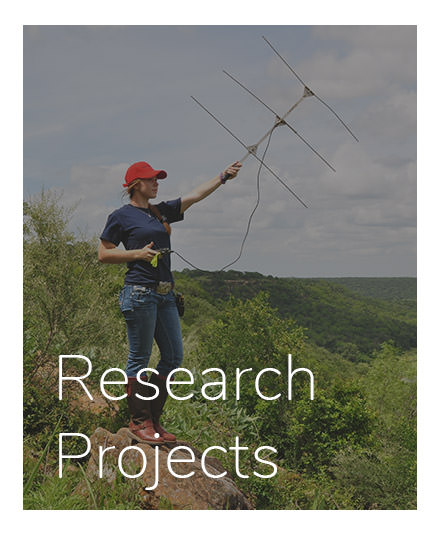
The “lead astronaut” for this mission is a young lady named Michelle Downey. Michelle hails from Connecticut, but has spent the last five years preparing for her current mission. Downey has completed internships at Tall Timbers Research Station (the Cape Canaveral of quail research), Utah and Colorado (working with sage grouse), and the Rolling Plains Quail Research Ranch. She has the skills, mettle, and support to make for a successful mission. Her Mission Control includes the board of the Rolling Plains Quail Research Foundation, a team of staff and interns from RPQRR and Texas A&M Agrilife Research, and funding from Park Cities Quail and private donors. The timing is right, and the homework has been done. Now it’s up to the quail.

As of Mar 28 a total of 215 bobwhites had been relocated. All hens were fitted with radio transmitters to permit surveillance over the next six months. Do they stay on-site? Do they survive? And ultimately, do they reproduce?

The potential for chaos abounds. Drought still lingers. A long list of potential predators awaits any inattentive quail. Can a “quail named Sue” improvise, adapt, and overcome?

As that first bird hopped from its transport cage to terra firma on its new home, I lapsed into a fit of anthropomorphism when I proposed that the bobwhite might be thinking “that’s one small step for quail—one giant leap for quail-kind.”


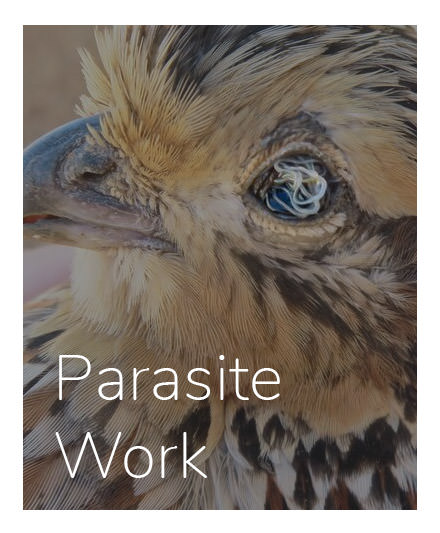
Operation Idiopathic Decline RPQRR’s comprehensive study of quail diseases, initiated last August (2011) has already made some initial, and intriguing, findings of high numbers of two parasitic worms. See the details at Operation Idiopathic Decline Project Overview.
  • OID Phase 2 – New Research Projects Funded

Videos:

Other OID Resources:

Operation Idiopathic Decline (OID) Summary

2011 RPQRR Field Day Report

RPQRR e-Quail Newsletter V3N5

RPQRR e-Quail Newsletter V3N9

RPQRR e-Quail Newsletter V3N12

RPQRR e-Quail Newsletter V4N2

RPQRR seeks sick quail reports from hunters (e-Quail News Flash)


Parasitic Worms Found in Texas bobwhites

ROBY, Texas—Poor-bob-white! Parasitic worms in the eyes and intestines of bobwhite quail have been found at record high levels in Texas bobwhites according to an ongoing research project. And, while researchers caution that their results are preliminary, early findings suggest the worms could be impairing the quail’s ability to thrive as it historically has across west Texas. Click to download Quail Parasites found at Record-High Levels in west Texas According to New Research Project

Watch this new video on how you can identify eyeworms in quail; see How to Check for Eyeworms in Quail


Bobwhite Genome Project

RPQRR bobwhite to play lead role in future DNA efforts. “Patty Marie” a bobwhite hen collected in July 2011 from the Rolling Plains Quail Research Ranch, leads the way as the type-specimen for a groundbreaking project called the “Bobwhite Genome Project.” See Bobwhite Genome Project: An Overview for more details about how genomics (“the bobwhite’s DNA roadmap”) could figure into the future of quail conservation.


Oklahoma Wildlife Department Joins the Fight

Oklahoma Wildlife Department is embarking on an intensive, long-term research project on two northwest Oklahoma wildlife management areas to study quail reproductive success and mortality. The Department is also teaming up with a group of partners to conduct an extensive research project that covers a broad portion of the bobwhite quail’s North American range. See Upland Urgency


Park City Quail News:

Park Cities Quail bags another record!!  Dallas-based Park Cities Quail www.parkcities.org continuers to be the wind under RPQRR’s wings via their continued support.  While the final tally of last Thursday night’s 6th annual banquet won’t be available for a few days, they set an attendance record of 1,000 “friends of quail”.  Over the past five yeaes, PCQ has donated $1.7 million for RPQRR’s research efforts, and it looks like this year’s event will permit even more support!

PCQ News Releases:

Bobwhite Genome Project

A fervor for hunting birds and helping them (March 4, 2012), Article Credits: Ray Sasser


RPQRR in the News:

Leaning on Science for some answers (January 26, 2012), Article Credits: Ray Sasser

Diseases may be culprits in quail losses (Februaury 11, 2012), Article Credits: Bill Miller

Parasites are prime suspects in quail decline (February 12, 2012), Article Credits: Ray Sasser

Puzzling decline (February 26, 2012), Article Credits: Ray Sasser

Flight risk (March 27, 2012) Article Credits: Ray Sasser


Team Quail AgriLife Research AgriLife Extension Ceasar Klemerg Wildlife Research Park Cities Quail Unlimited


Sign me up for the e-Quail Newsletter


Email Marketing by VerticalResponse


© Copyright All Rights Reserved - R.P.Q.R.R. | Privacy Policy
Website Development by Wheeler Advertising